
BLOG

Freedom is not only about breaking sinful patterns; it is also about allowing Jesus to heal the broken places of the heart. In this second part of the Set Free series, we look at how pain, disappointment, and wounds can leave areas of the soul guarded or fractured, and how Jesus comes near to heal, restore, and make our hearts whole in His love.

Freedom begins in the heart. Before we ask for more rain, more revelation, or more deliverance, we must allow the Lord to break up the hardened places within us and make our hearts tender again.

God moves toward the hungry. When your soul aches for His presence, when you refuse to settle for blessing without intimacy, doors open, chains break, and revival stirs in your life. This is about relentless pursuit. We can learn how to fan the flame of your desire, overcome what dulls your hunger, and walk in a depth of God that transforms every season of your life.

For the first time in twenty years of night-and-day worship and prayer, we examined publicly available data to ask an honest question: did anything tangibly change in our region? What we found defied national expectations and reshaped how we understand persevering prayer and regional transformation.

The restoration of the Tabernacle of David reveals God’s enduring desire to dwell among His people. From David’s open tent of unceasing worship to the practices of the early Church, Scripture unfolds a presence-centered Kingdom where worship, unity, and mission flow from God’s habitation in the midst of His people.

What God lost in Eden, recovered in Israel, and embodied in Christ is now lived out through the Church. Wherever believers gather in Jesus’ name, God makes His dwelling among them. The Church is not merely a meeting or an institution but a living temple filled with the Spirit and sent to carry His presence to the nations.
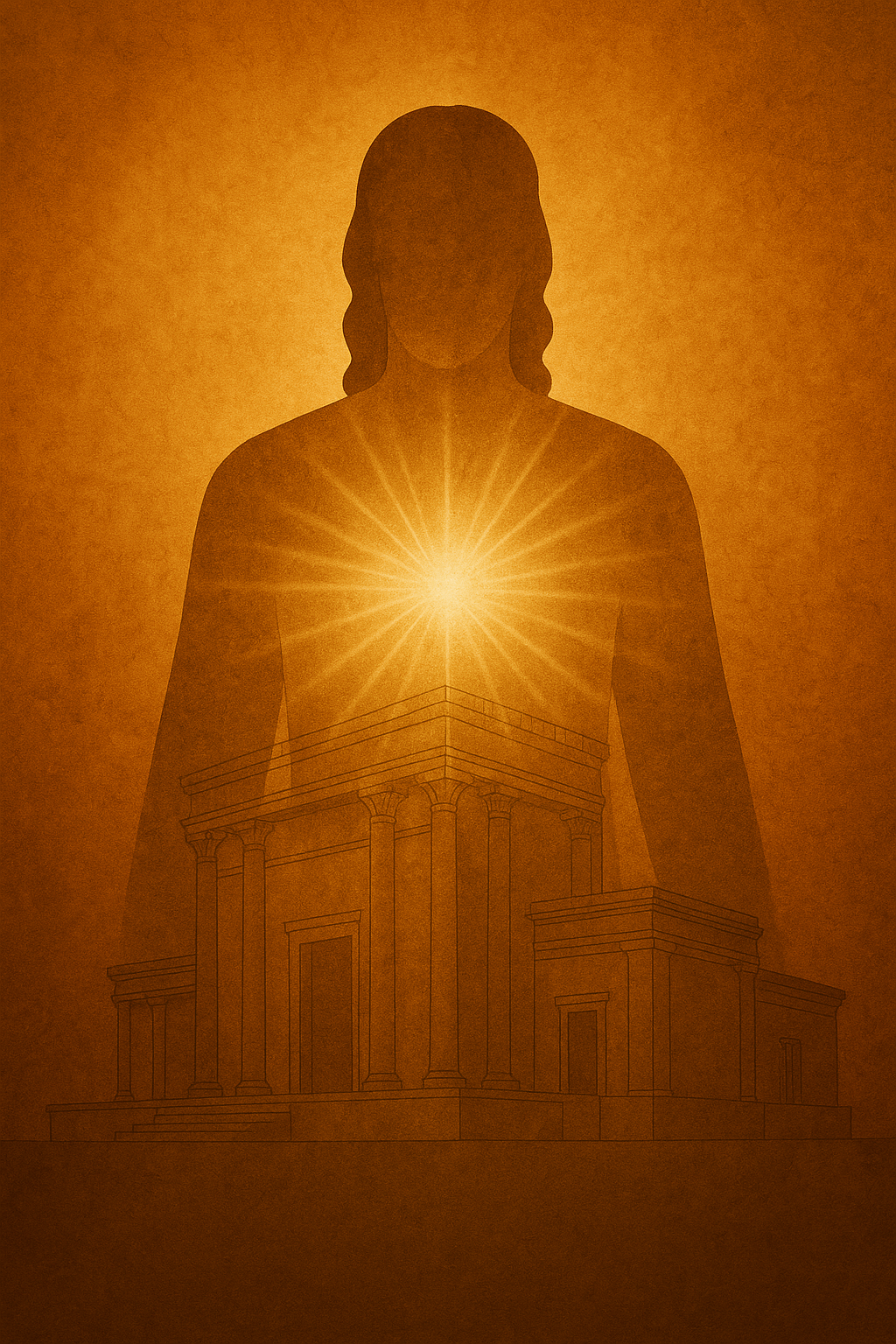
In Part 4 of The Presence-Centered Kingdom, we explore how the long story of God dwelling among His people reaches its fulfillment in Jesus Christ. From tabernacle to temple, every symbol and shadow pointed to the moment when the Word became flesh and made His home among us. Christ becomes the true dwelling place of God, and through Him, the indwelling Presence now fills His people.
Israel was never meant to be defined by borders, armies, or politics but by the Presence of God dwelling in its midst. From Moses’ tabernacle to Solomon’s temple, the story of Israel reveals a kingdom shaped by divine nearness. This article explores Israel’s calling as a Presence-centered nation, its priestly vocation, its failures, and the prophetic promise of a restored dwelling fulfilled in Christ and continued in the church.
In David’s refuge at Naioth, something more than protection unfolded — a prophetic convergence between Samuel, the voice who restored God’s word, and David, the psalmist who would enthrone God’s presence. In this hidden habitation, the Spirit moved with unusual power, shielding God’s purposes and imparting heaven’s blueprint for a presence-centered kingdom. Naioth became the incubator where the voice and the vision met.

In the days when the word of the Lord was rare, Samuel emerged as a bridge between a corrupt priesthood and a restored prophetic order. At Ramah, he built an altar to the Lord and rekindled Israel’s original calling—to be a people centered around God’s presence. His prophetic worship community became the seedbed of David’s kingdom, showing us that revival begins when God’s voice is heard once again.

The Song of Solomon ends with a vision of love in full maturity. The Bride has walked through testing, misunderstanding, and waiting—but now she stands radiant, bold, and sealed with fiery love. This is where Jesus is leading His people: into wholehearted partnership with Him, marked by passion, purity, and power.

After surrendering fully, the bride faces not glory but the night. In Song of Solomon 5, the Beloved calls her into darkness—not as punishment, but as invitation. This “dark night of the soul” reveals a love that’s tested, purified, and made steadfast. Here, we learn to love Jesus for His beauty, not just His blessings.

Jesus didn’t suggest that we try not to worry—He commanded it. In Matthew 6, He invites us into a life of freedom from anxiety through trust in the Father’s care. Here are seven practical ways to step out of fear and into peace.

Jesus doesn’t wait for perfection before calling us beautiful. In Song of Solomon 4, the Bridegroom looks at the bride—still in process, still weak—and declares, “Behold, you are fair, my love!” He delights in her simple yes, her willing heart, more than in flawless performance. Every glance, every small surrender, ravishes His heart. This is the scandal of grace: He sees our flaws but calls forth our budding virtues, inviting us into partnership with Him.

Part 3 of our Song of Solomon series explores the “night season” of divine discipline. Learn how suffering, obedience, and spiritual hunger deepen our intimacy with Jesus.

By chapter two of the Song of Solomon, the storyline shifts. The Bridegroom no longer simply nurtures—He calls. He beckons us beyond comfort into obedience, maturity, and holy confrontation with what keeps us small. Will we say yes when His voice comes leaping over the mountains?

The most transformative message I’ve ever encountered didn’t come from a revival or a power encounter—it came from one of the most unexpected books in the Bible: the Song of Solomon. This poetic and prophetic book gave me language for God's love that no systematic theology ever could. What started as confusion became an invitation into healing, identity, and burning affection with Jesus.

Fear is not just a feeling. It’s a ceiling. But the Gospel doesn’t just save us from sin. It invites us into family. You weren’t meant to live as a slave or an orphan. You were chosen, adopted, and called a child of God.
There’s a line in the song So Will I that says, “As You speak, a hundred billion failures disappear.” That lyric captures the gospel in a sentence. The cross didn’t just cover our failures—it made them disappear. Every mistake. Every regret. Gone.

You are not just forgiven. You are chosen. Adopted. Delighted in. The Father doesn’t need more servants—He wants a family. And He wants you in it.

What’s happening inside your heart is shaping everything about your life. Freedom doesn’t come by ignoring the pain — it comes by facing it head-on and letting Jesus heal the plague that’s hidden inside.

Jesus isn’t after your performance. He’s after your heart.
Not the version you’ve cleaned up or learned to protect—but the real you. The one that’s been bruised, disappointed, maybe even shut down. He wants to meet you there—not to shame you, but to heal you.
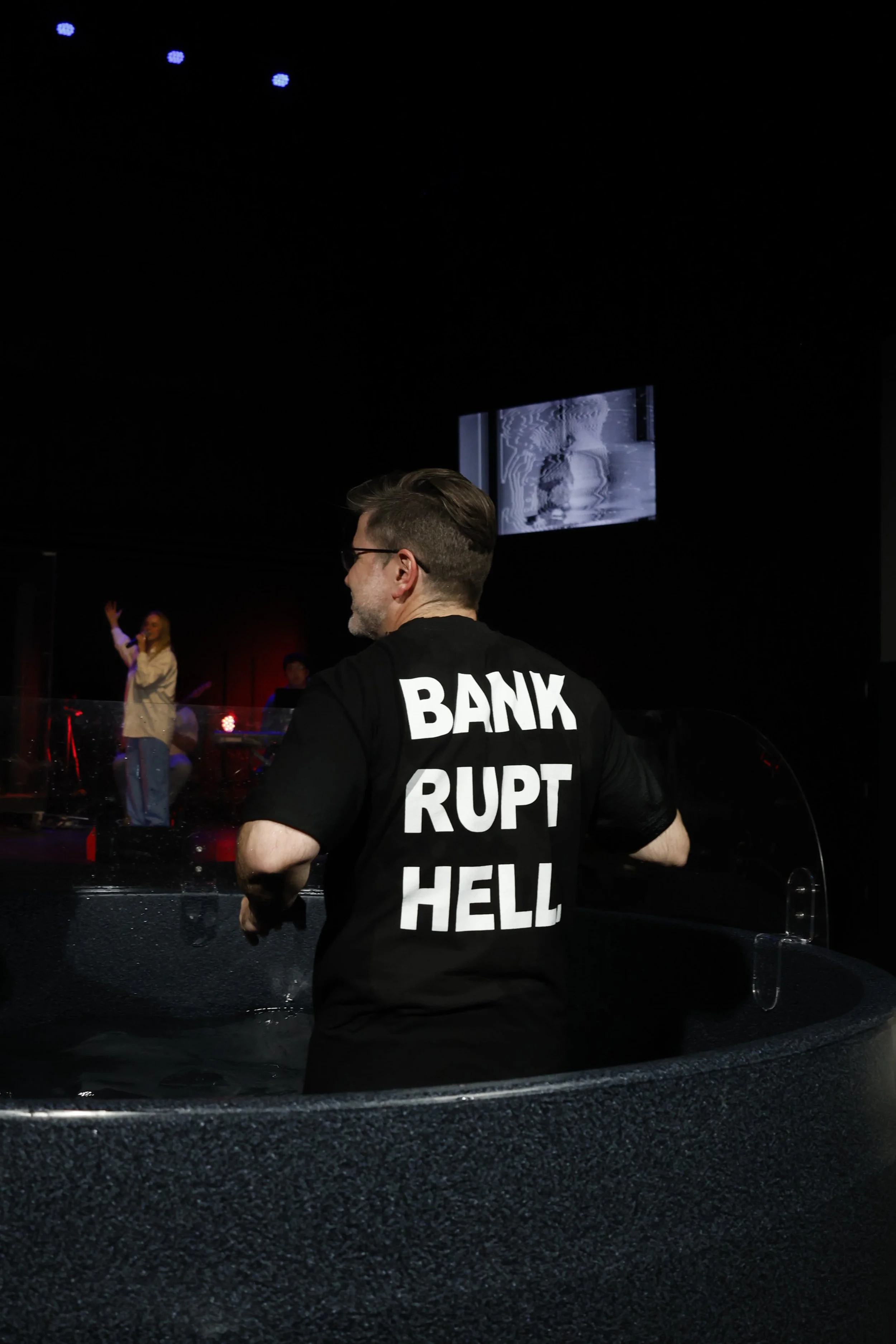
What started as five baptisms turned into over thirty as the Holy Spirit moved powerfully among young adults. It was joy, repentance, and resurrection life—God is marking Gen Z.

Paul’s vision of the church wasn’t organizational—it was architectural. He saw the people of God as a dwelling place being built for His presence. Hosting God requires more than good planning; it demands priestly leadership, prophetic space, and surrendered hearts. ‘God is really among you’ wasn’t just a possibility for Paul—it was the goal.

The Apostle Paul didn’t see the church as just an organization or a gathering of believers—he saw it as the new temple, a dwelling place for the manifest glory of God. Rooted in temple theology and empowered by the Holy Spirit, Paul stewarded the presence of God in the local assembly with conviction. From worship order to church discipline, everything he taught pointed to one goal: cultivating space for God to dwell among His people. This blog explores Paul’s presence-centered ecclesiology and what it means for the Church today.
You haven’t suffered because you’ve failed. You’ve suffered because God is inviting you closer—not just as a child or servant, but as a friend. The kind of friend who stays in the silence, walks through the fire, and chooses presence over answers. This is the kind of friendship Jesus died to offer—and it changes everything.

There is so much more available. Let’s not settle for a watered-down version of Christianity. I’m calling us to a fresh infilling of the Holy Spirit—devoted to prayer, bold in faith, and rejoicing in persecution. Let’s expect signs, wonders, and miracles, reclaiming the vibrant, Spirit-filled life Jesus intended. This is what we were made for!

As we step into 2025, I sense the Lord’s invitation to believe again, to hope again, and to dream again. For many, 2024 was marked by challenges that left hearts heavy and faith shaken. Yet, even now, God is speaking a word of hope:
"For I know the plans I have for you," declares the Lord, "plans to prosper you and not to harm you, plans to give you hope and a future. Then you will call on me and come and pray to me, and I will listen to you. You will seek me and find me when you seek me with all your heart." (Jeremiah 29:11-13)

The past year has brought deep challenges to the House of Prayer movement, calling us to embrace a new humility in our worship and prayer. As we face trials and moral failures within the church, we’re reminded of David’s journey to bring the Ark of the Covenant to Jerusalem. Just as David learned that God’s will must be done God’s way, we too are being called to center our prayer rooms on the presence of Jesus, with humility and obedience. This is a pivotal moment for the church, where prayer and fasting must take precedence, and we must carry God's presence as a kingdom of priests.

So often believers look to sources outside of Scripture to find principles to live by. Some of these resources can be helpful, but almost always they’re incomplete because they don’t take into account a Biblical worldview.

In Psalm 145:5, David declared, “I will meditate on the glorious splendor of Your majesty, and on Your wondrous works.” Paul followed up David by instructing us to, “seek those things which are above, where Christ is seated at the right hand of God. Set your mind on things above, not on the earth.”(Col 3:1-2). Whoever came up with the idea that a person could be too heavenly minded to be any earthly good must have overlooked these passages!

I was thirty-three years old when God called me to transition from being a youth pastor to move my family to Kansas City to learn the message, model, vision, and values of the House of Prayer. I was working for an incredible church and just when things seemed to be peaking, the Lord called me away to seek Him in perpetual worship and prayer.

The Lord has been dealing with me about my own digital habits for some time. I have felt cautioned by the Lord from time to time to make sure that I wasn’t being controlled by my phone or iPad. At the end of last year I felt strongly impressed to do away with distractions and specifically get out of the habit of allowing my phone to control my time. Here are seven things that I’m doing right now that our helping me to overcome my phone dependency.

I wrote the last couple of weeks about how the Lord has been speaking of our great need to overcome areas of superficiality in our lives. As I started the New Year in the prayer room, my heart and mind were literally buzzing were with the Holy Spirit’s presence. I felt the Lord’s nearness so freshly. As the Lord does, He kindly began to impress upon me several personal areas that He was inviting me to overcome superficiality in my life this year. Putting these in writing helps me to be accountable and hopefully, at the same time, it will encourage you.

I wrote last week about a leadership meeting I was a part of with thirty leaders from the prayer, worship, and mission movement where the Lord emphasized the issue of superficiality in the Church and the call to come out of it. In that meeting those gathered identified at least five key areas to address in our lives. I want to share them with you here and challenge you to consider these areas before the Lord asking Him to deepen your walk in each area.

Superficiality is defined as living with a lack of depth or serious thought. Richard Foster in his classic Celebration of Discipline states, “Superficiality is the curse of this age. The desperate need today is not for a greater number of intelligent people, or gifted people, but for deep people.”

The scriptures are clear that there is rest for our souls if we will come to Jesus. The fact that He calls the weary and heavy laden to Himself tells us they hadn’t been with Him. With Him is peace. Here are five steps to rest for your soul.

As we are looking toward 2020, I want to share six prophetic insights I believe the Lord is emphasizing for His Church in the coming year and beyond. I pray that the Lord witnesses to your heart through this writing and draws you into the center of His desires for the coming year.

Every human heart has been constructed with the same mystical framework – We all share an insatiable appetite for wonder. We love to be wowed. We love to be awed. Beauty enthralls us. Mystery captivates us. We continuously want thrill and shock. We are moved by a hardwired code in our hearts that demands amazement. All of this is divine design. It’s Heaven’s fashioning manifest in our being.

How often do we hear a good word, but then don’t put the word into practice? James calls this being “self-deceived”. He goes on to explain that when we live this way, we lose our identity. Perhaps a key reason the church isn’t operating in the full power of our identity is because we are bound in self-deception.
Recently the Lord spoke to one of our leaders in a dream about the severity of self-deception in the Church. Before he had a chance to share the dream with me, the Lord put it on my heart to preach about overcoming self-deception! When He shared the dream with me the day after I preached about it, I was shocked by how specifically the Lord was emphasizing self-deception as a critical sin we must overcome.

I am fresh off of a historic meeting that has me captivated my imagination with the possibilities of what God can and will do in the LGBTQ community. I met with over 20 leaders of “once gay” ministries who are all coming together in unity and prayer right now for a mighty move of God among the LGBTQ community. I have gotten to know several of these leaders and their testimonies are all unique.
One thing they all share: They have all been completely delivered and live sold-out lives for Jesus.
I signed up for full time ministry because I wanted to love and serve Jesus. And hopefully, by the grace of God, I am serving Jesus in the way that He’s desired.

Fasting with prayer has been one of the most life changing tools of my spiritual life. As a young man I began to lean into the grace of fasting and I can confidently say that the Lord has used it to bring spiritual benefits in my life. I want to share five benefits that we can experience through fasting and prayer. I’m sure there are dozens, but these are areas I’ve seen God move in my life through fasting and prayer.

Fasting with prayer isn’t super-spirituality - it’s normal Christianity. It’s a normal practice for believers in this age. As we live in recognition that Jesus is not physically with us but one day He will be returning our hearts are moved to seek Him with passion and desire. It’s this longing and aching in our souls for His presence and return that compels us to lean into the grace of fasting and prayer, seeking Him with all of our hearts.

I’m convinced every believer needs to be regularly refreshed in the love of God. We are created by God to continually have fresh encounters in His love. It’s how He made us and how we are to live as believers – vibrantly alive in His love and affections.

“If you find my beloved, tell Him that I am lovesick” Song of Solomon 5:8
Recently, as I was reading Song of Solomon, I noticed in the first chapter several prayers of adoration the maiden prays. By the second chapter she declares that she is lovesick(Song 2:5). I’m convinced this is how he Lord wants us to live now, before the wedding of the Lamb. There is an obvious progression from where she is longing for love to the place where she is completely undone, lovesick.
I want to highlight several of these prayers and encourage you to pray
them regularly.

Immediately Ephesians 3:14 floated through my mind, “I bow my knee to the
Father from whom the whole family in heaven and earth is named.” The Lord was
speaking to me about spiritual family. The idea of healthy spiritual family is not
just a sentimental idea; God is a father and we are His family.
The following are some thoughts He has impressed on my heart about what it means to live as family.


Mal 4:5-6 Behold, I will send you Elijah the prophet before the coming of the great and dreadful day of the LORD. 6 And he will turn the hearts of the fathers to the children, and the hearts of the children to their fathers, lest I come and strike the earth with a curse.

I was asked recently by a student at a local theology school the following questions on leadership. I thought they were interesting questions, so I wanted to post them here for you:

“From the days of John the Baptist until now the kingdom of heaven suffers violence, and the violent take it by force.” (Mat 11:12)
John the Baptist life marked a significant change in the kingdom of God. Jesus explained that John’s lifestyle caused a profound transition to take place in the earth in his generation. This transition had to do with a new passionate way people would seek God and possess the Kingdom.

Now that we’ve discussed a few challenging passages that are used to prohibit women from functioning as preachers and teachers in church, let’s take a look at four clear examples of women in the bible functioning in these roles.

In Women in Ministry? Part 3, I addressed the so-called “prohibition” of women preaching and leading in the church from 1 Timothy Chapter 2. There we found that much of what Paul was addressing had to do with believers exhibiting proper respect for the cultural expectations of the city they were living in.

For some, this is a simple misunderstanding of Scripture. For others, this text serves to bolster the sin of misogyny. This is a sin that must be repented of, if the church is going to enter into the destiny the Lord has intended. If you see this passage as a prohibition on women speaking in church, I ask you to consider it again in light of other biblical texts and the historical context.

As we consider what the bible teaches about women in ministry we have to take into account not only the straight forward teaching about gender roles, but also consider the praxis of the entire biblical narrative. What am I saying here? There are biblical principles and there are biblical practices.

It would be the first time a woman preached in a church service in that particular facility. I was stoked! The worship in both services was attended by a powerful sense of the presence of God. There was a general excitement in the air. I knew as our local spiritual family came together to worship Jesus and honor women and mothers, the church all over the nation was doing likewise.

Two days after OneRace Stone Mountain I found myself on a plane heading to Asia to speak at a conference for underground house church leaders. With my heart still bursting with joy over all that God did at that historic gathering, the Lord began to speak to me from a passage that I’d spent dozens of hours considering over the last year – John 17.









In Jesus first public sermon, the Sermon on the Mount, He emphasized meekness as one of the core values of the Kingdom of God. At the very onset of His message He made a shocking statement, it’s not the strong, rich, or accomplished who will reign with Him in His Kingdom, it’s the meek, lowly, and humble.

Over the last decade I’ve had the privilege to travel around the world visiting some extremely remote villages as well as some of the world’s largest metropolises. From China to Australia, Jordan to Germany, Israel to Australia, and Kenya to Hong Kong it is absolutely clear that God is raising up His house of prayer.

Think about it. Daniel was about sixteen when he was taken into captivity in Babylon. Put yourself into his shoes for a moment. Imagine how painful and disruptive it would be to have your hometown stormed by an invading army and then to be forcefully relocated as a prisoner of war to a distant, foreign land.

One of the challenges in understanding the story line of Daniel is the chronology of the book. Because the chapters are not laid out in a chronological order it’s difficult to understand the flow of events. The book is actually put together thematically, in two distinct parts: 1) Life in Babylon 2) Prophetic Visions.
Strongholds form when lies become more believable to us than the truth of God’s Word. In Christ, we have been given authority to take thoughts captive, resist the enemy, renew our minds, and walk in freedom. No lie is stronger than the truth of His Word, and no stronghold has more authority than the name of Jesus.